


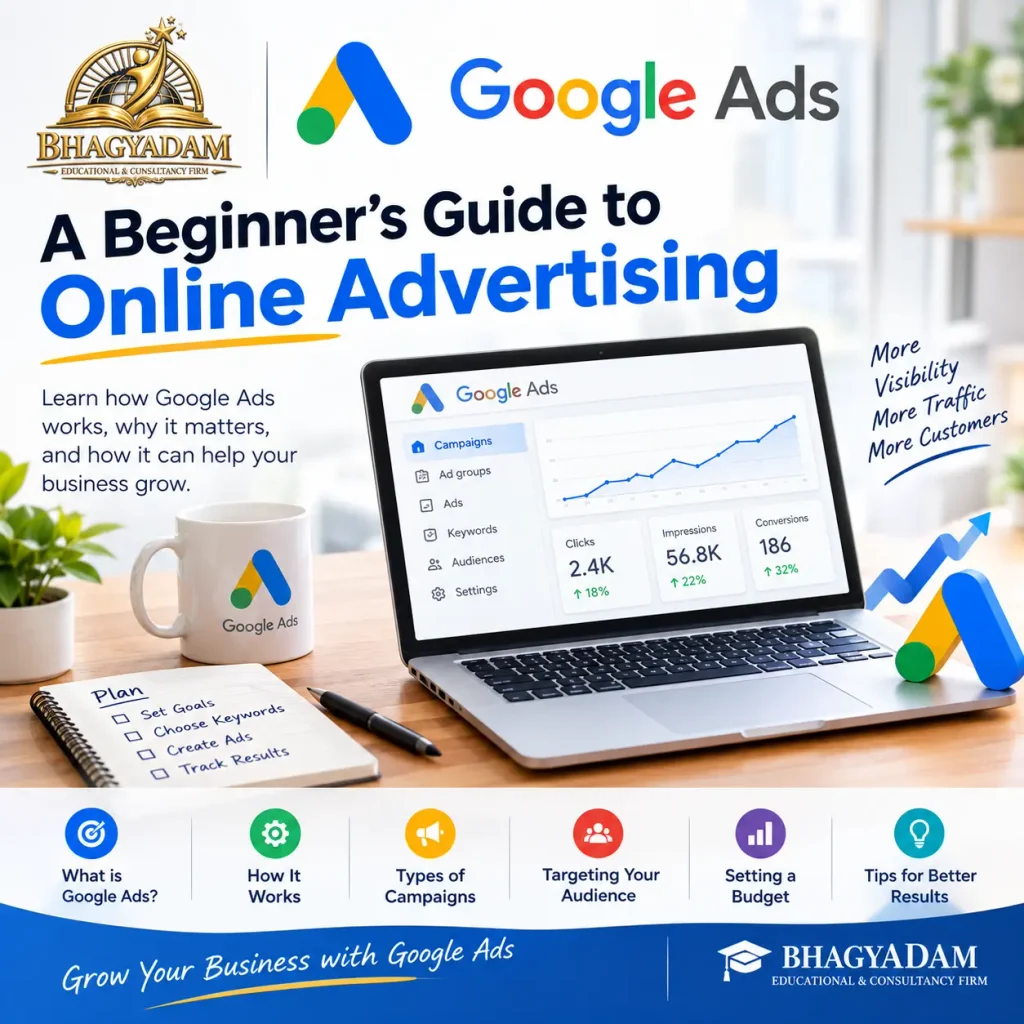
Google Ads is an online advertising platform that helps businesses promote their products, services, websites, and offers to people who are searching for relevant information on Google. It allows advertisers to create paid campaigns based on factors such as keywords, location, audience, budget, and marketing goals.
For beginners, Google Ads can seem confusing because it includes several advertising terms and settings. However, learning the basic concepts step by step can make paid advertising easier to understand. Students, freelancers, business owners, and marketing professionals can all benefit from learning how Google Ads works.
What Is Google Ads?
Google Ads is Google’s paid advertising platform. Businesses use it to create advertisements that can appear across Google’s advertising network.
For example, imagine someone searches for “digital marketing course in Agra.” An institute offering a relevant course can create an advertisement designed to reach people making similar searches.
The advertiser can control different parts of a campaign, including:
Keywords
Location
Budget
Advertisement
Audience
Landing page
Campaign objective
The purpose is not simply to make an advertisement visible. A campaign should connect the business with people who may genuinely be interested in its offering.
Why Do Businesses Use Google Ads?

Think about how people search for products and services today. Someone may search for a restaurant before going out, compare products before shopping, or look for a course before choosing an institute.
Businesses can use Google Ads to become visible during these searches.
Google Ads can help businesses:
Reach potential customers
Generate website traffic
Promote products and services
Increase enquiries
Support online sales
Reach selected locations
Promote special offers
Build awareness
The purpose of advertising can be different for every business. A local clinic may want phone enquiries, while an online store may focus on product purchases.
Ask yourself: What would be more valuable for your business—website visits, enquiries, phone calls, or sales?
Understanding the desired outcome can help determine the direction of an advertising campaign.
How Does Google Ads Work?
Google Ads uses an advertising auction to determine which eligible advertisements can appear for a particular search or advertising opportunity.
When someone searches Google, relevant advertisements may enter the auction. Several factors can influence the result, including the advertiser’s bid, advertisement relevance, quality, landing-page experience, and search context.
This means that advertising success is not simply about spending more money.
A relevant advertisement can provide a better experience when its message matches what the user is searching for.
For example, someone searching for “Google Ads course for beginners” would expect an advertisement related to learning Google Ads rather than an unrelated service.
What Are Keywords?
Keywords are words or phrases that advertisers use to connect campaigns with relevant searches.
A digital marketing institute, for example, might research terms such as:
Digital marketing course
Google Ads course
Google Ads training
SEO course
Digital marketing classes
PPC course
Choosing keywords requires more than finding popular phrases. Advertisers should also understand search intent.
Someone searching “what is Google Ads” may simply want information. A person searching “Google Ads course near me” may be looking for training.
Understanding what users want can help advertisers create more relevant campaigns.
What Types of Google Ads Are Available?
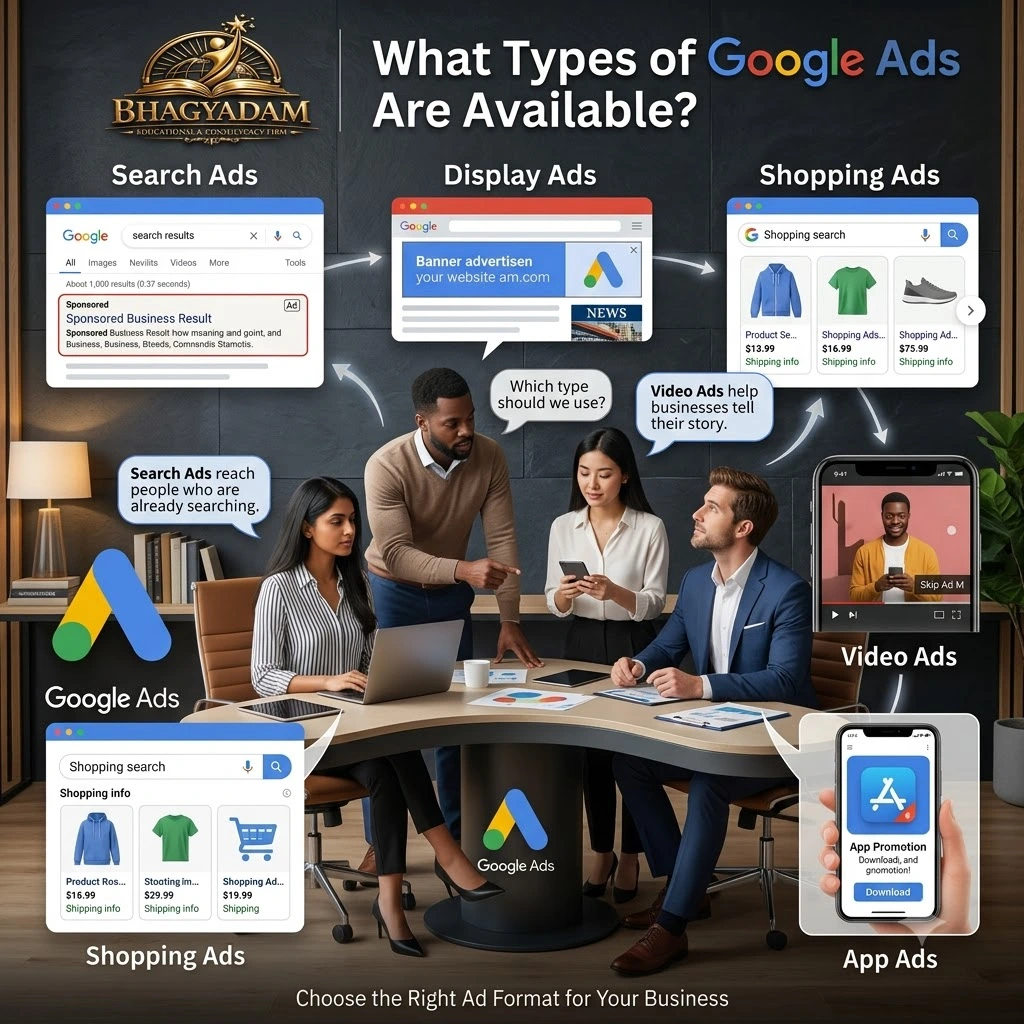
Google Ads supports different advertising formats for different marketing requirements.
Search Ads
Search advertisements can appear when users search for relevant terms on Google. They can be useful for businesses that want to reach people who are actively looking for a product or service.
Display Ads
Display advertising allows businesses to use visual advertisements across eligible websites and digital placements. These campaigns can support awareness and remarketing activities.
YouTube Ads
Businesses can also promote their products or services through video advertising on YouTube. A short video can demonstrate a product, introduce a service, or explain an offer.
Shopping Ads
Online retailers can use Shopping campaigns to showcase products to potential customers with information such as product images and prices.
Why Is the Landing Page Important?
An advertisement may bring a visitor to a website, but the landing page can influence what happens next.
Imagine clicking an advertisement for a digital marketing course and reaching a page where the course information is difficult to find. The visitor may leave without taking action.
A useful landing page should:
Match the advertisement
Explain the offer clearly
Work properly on mobile devices
Provide relevant information
Make contact details easy to find
Include a clear call-to-action
The advertisement attracts attention, while the landing page helps guide the visitor toward the next step.
How Is Google Ads Performance Measured?
Digital advertising provides data that can help advertisers understand campaign activity.
Depending on the campaign, marketers may examine:
Impressions
Clicks
Click-through rate
Cost
Conversions
Conversion rate
Cost per conversion
For example, a campaign may receive many clicks but generate very few enquiries. Looking at the data can help identify areas that may need improvement.
Remember: A large number of clicks does not automatically mean a campaign is achieving its business goal.
The important question is whether the advertising is producing the type of result the business actually wants.
Who Can Learn Google Ads?
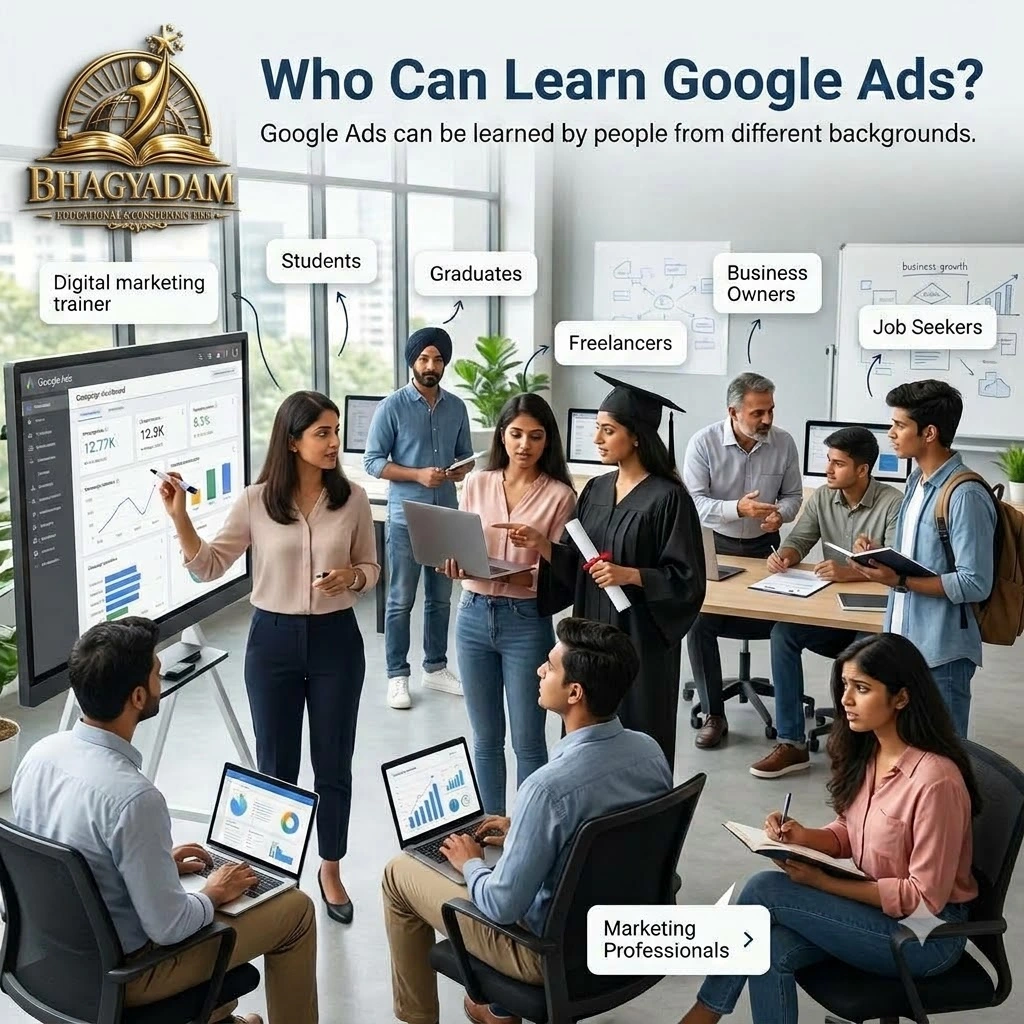
Google Ads can be learned by people from different backgrounds.
It may be useful for:
Students
Graduates
Freelancers
Business owners
Job seekers
Marketing professionals
Digital marketing beginners
A student may learn Google Ads as part of digital marketing training, while a business owner may study it to understand online advertising for their own company.
You do not need to master every feature at once. Starting with fundamentals and practising regularly can make learning more manageable.
How Should a Beginner Start Learning Google Ads?
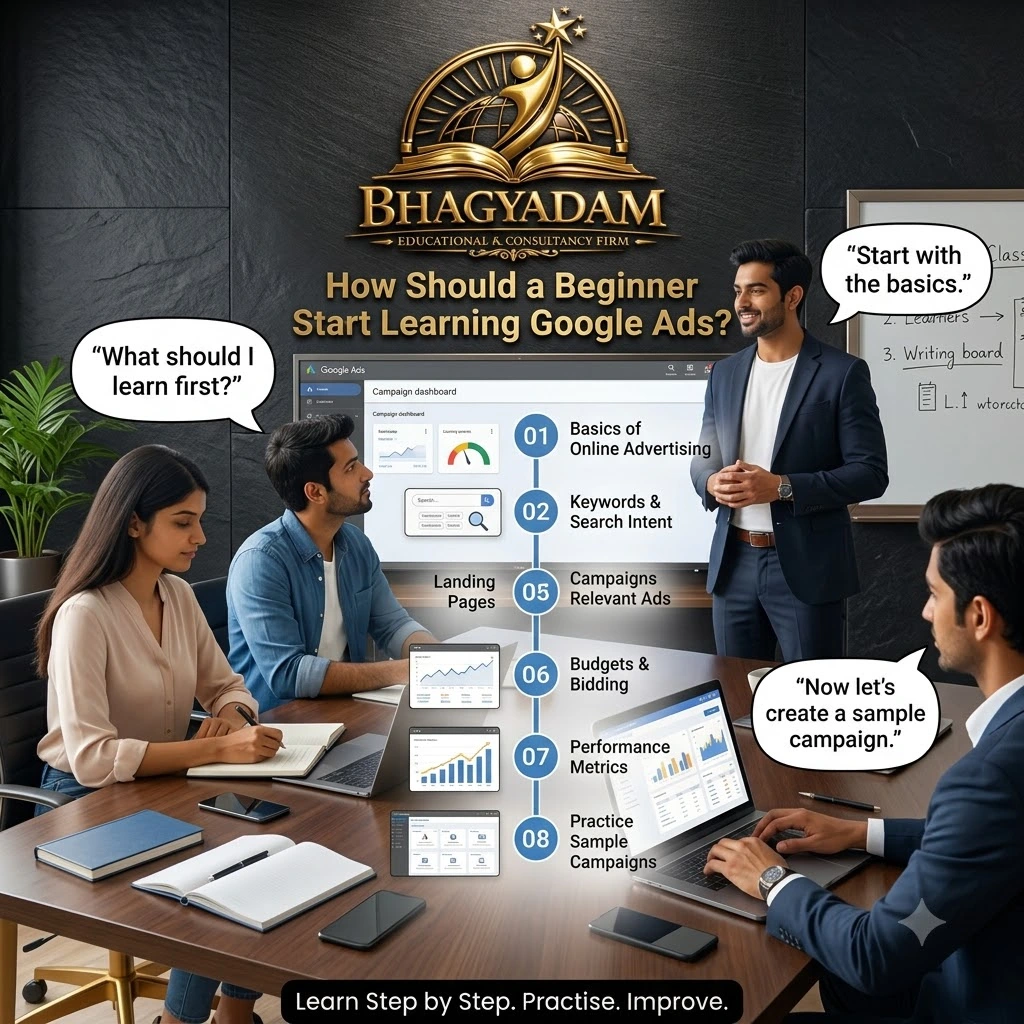
A beginner can follow a simple learning process:
Step 1: Understand the basics of online advertising.
Step 2: Learn about keywords and search intent.
Step 3: Understand campaigns and ad groups.
Step 4: Practise writing relevant advertisements.
Step 5: Learn about landing pages.
Step 6: Understand budgets and bidding concepts.
Step 7: Study important performance metrics.
Step 8: Practise creating sample campaigns.
Learning becomes more useful when theoretical knowledge is combined withpractical exercises.
Frequently Asked Questions
Ans. Advanced coding is generally not required to understand the basic principles of Google Ads. Some technical knowledge can be useful when working with websites and conversion tracking.
Ans. Yes. Small businesses can use Google Ads to reach relevant audiences based on campaign settings such as location, keywords, and advertising objectives.
Ans. No. Google Ads provides paid advertising, while SEO focuses on improving a website’s organic visibility in search results. They are separate digital marketing approaches.
Ans. The basics can be learned in a relatively short period, but developing practical skills requires regular practice, campaign analysis, and continued learning.
Final Thoughts
Google Ads can help businesses connect their advertising messages with people who may be interested in their products or services. However, effective advertising involves more than creating an advertisement and setting a budget.
Advertisers need to understand their audience, choose relevant keywords, create useful advertisements, provide suitable landing pages, and monitor campaign performance.
For beginners, a simple approach is:
Learn → Practise → Measure → Improve.
People Also Search:-
Digital Marketing Course: Learn SEO, Ads, Social Media & More
Leave a Reply